
Executive Summary & Policy Impact
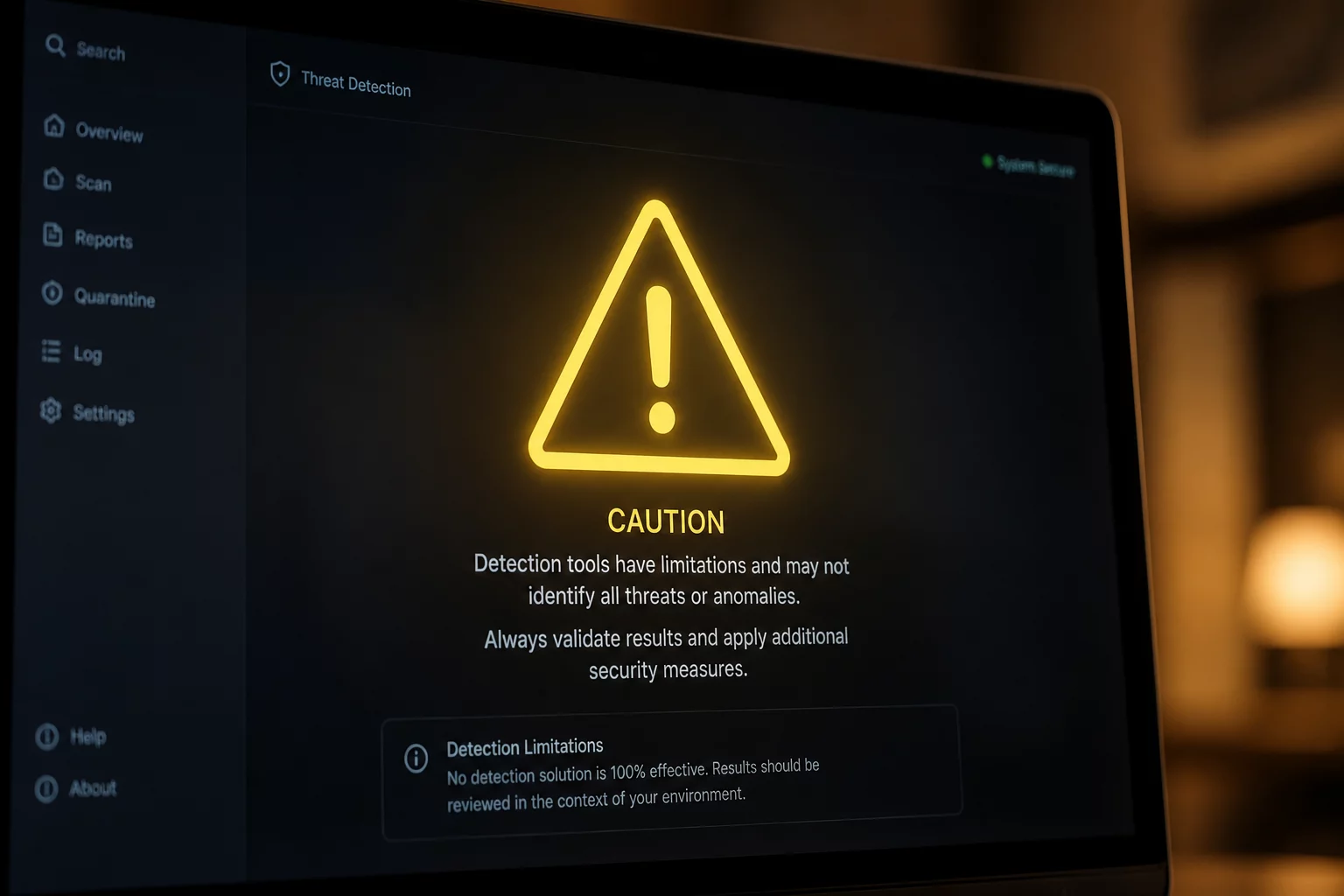
Leading educational institutions and ed-tech developers have reached a decisive turning point in academic integrity enforcement. In an updated series of documentation updates and policy briefs, Turnitin and partner university senates have formally reiterated that automated AI detection scores cannot serve as standalone proof of academic misconduct. The software provides probabilistic pattern matching rather than deterministic forensic evidence, creating substantial risk when used without human corroboration.
The revised operational directives address mounting concerns across international campuses regarding false-positive rates, particularly among English-as-an-Additional-Language (EAL) student cohorts. Standardized formulaic phrasing in academic literature reviews regularly triggers statistical alarms in detector models, demonstrating why qualitative source-role taxonomy and version history tracking must take precedence over automated scores.
Core Analytical Benchmark
Automated detection scores indicate statistical similarity to training corpuses, not deliberate non-disclosure. No punitive academic tribunal should accept automated percentages without corroborating qualitative drafting histories and source attribution verification.
Source: Joint Higher Education Academic Advisory Board & Assessment Ethics Protocol (2026)Methodological Critique & Evidentiary Findings
Recent benchmark evaluations highlight persistent vulnerabilities in large language model classifiers. When essays feature heavily structured disciplinary citations, literature review taxonomies, or formulaic methodology definitions, perplexity metrics decrease naturally. Because detection algorithms interpret lower sentence perplexity as machine generation, high-achieving student writers and international researchers face elevated odds of false accusations.
To counteract these vulnerabilities, universities are establishing multi-tiered review boards. Faculty members are instructed to treat detector output solely as an exploratory diagnostic indicator. Academic reviews must require supplementary evidentiary artifacts, including live writing defenses, annotated research bibliographies, and verifiable repository citation structures.
Structured Policy Directives
- Mandatory prohibition against filing disciplinary allegations based entirely on automated percentage indicators.
- Establishment of verifiable drafting trace requirements, including iterative version commits and citation mapping.
- Specific safeguards for international and multilingual authors to eliminate linguistic uniformity false positives.
- Integration of source-role classification reviews to authenticate human synthesis of empirical literature.
Ultimately, the clarification signals a broader pedagogical shift away from punitive surveillance and toward authentic scholarly assessment. By emphasizing structured citation taxonomies, contextual source usage, and transparent research documentation, academic faculties cultivate rigorous scholarship while protecting equitable student evaluation standards.
SourceRole Atlas Editorial Board. (2026). Turnitin and Major Universities Clarify Limits of AI Detectors. SourceRole Academic Policy Review, 14(3), 112-119.

Tech Editor
Lead Technical Policy AnalystSenior editorial researcher specializing in computational linguistics, scholarly verification protocols, and academic citation infrastructure across global universities.
Peer Reviews & Scholarly Discussion
2 EntriesDr. Aris Thorne
Senior Research MethodologistThis comprehensive synthesis mirrors our institutional findings regarding automated detection thresholds. Establishing multi-tiered evidentiary frameworks is paramount to protect student equity.
Elena Rostova
Curriculum Analyst@Dr. Aris ThorneAgreed completely. The divergence rates across non-native English writing cohorts remain the most concerning variable in daily coursework grading.
Submit Academic Peer Feedback
Contributions are held for editorial integrity and taxonomy verification before publication.